
St. George Pool Care Guide
Why a CPO-Certified Pool Tech Matters for St. George Homeowners
CPO training adds formal education in water chemistry, circulation, filtration, chemical handling, and pool operation. Here is what the credential means, what it does not mean, and why those distinctions matter for residential pool care.
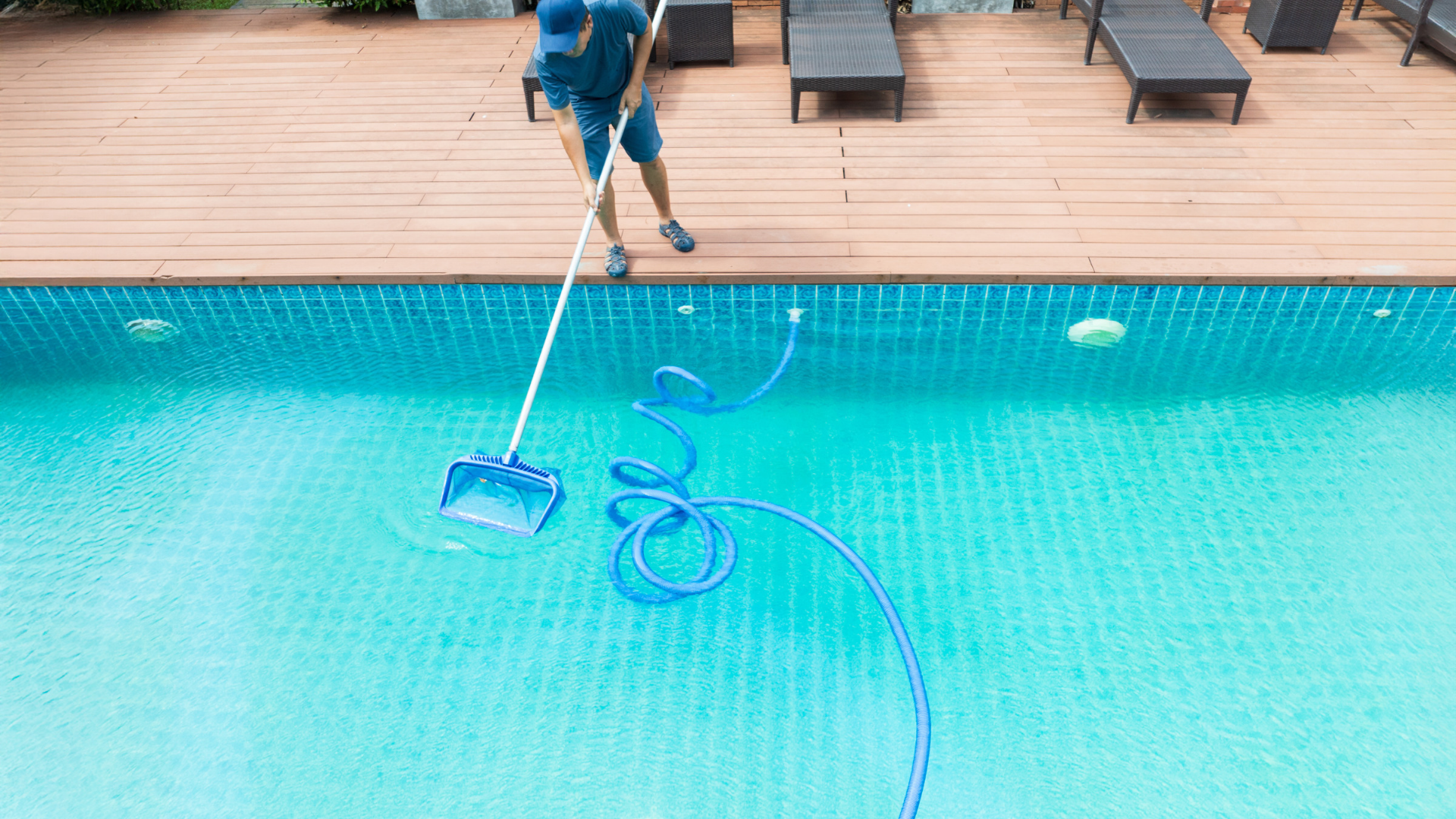
A weekly pool visit involves more than removing leaves. Water conditions, circulation, filtration, chemical handling, weather, and pool use all affect the decisions made during service. A Certified Pool & Spa Operator® credential, commonly called CPO®, shows that the credential holder completed a defined training program and passed an examination.
Why CPO certification matters even when Utah does not require it for your backyard pool
Utah’s public-pool rule requires regulated public pools to operate under a qualified pool operator who completed a Department-accepted training and testing program. The rule also requires weekly operator visits and specific records for those facilities.
That requirement is not a general mandate for private backyard pools. Utah defines and exempts a private residential pool that serves three or fewer associated living units. A homeowner is not required by this public-pool rule to hire a CPO-certified professional.
Certification can still be a useful service-selection signal. It shows that formal education and testing support the technician’s approach. It is not a Utah business license, a guarantee of results, or proof that every recommendation will fit every pool.
What CPO-certified pool professionals learn
The Pool & Hot Tub Alliance describes its classroom CPO program as 16 hours over two days. A blended 16-hour route is also available. Certification requires passing the CPO exam. PHTA’s classroom-course listing describes a 50-question, open-book exam.
Course topics include water disinfection and balance, testing and recordkeeping, chemical-feed management, circulation, filtration, troubleshooting, operational safety, and regulatory guidance. The curriculum also addresses chemical hazards and common risks around aquatic facilities.
According to PHTA, the credential is valid for five years from the end of the month in which it is issued. PHTA also provides a digital badge that identifies the holder as certified. These details make the credential easier to discuss and verify, but they do not replace a current certificate or a clear explanation of who holds it.
Why professional training matters in St. George conditions
Outdoor pools in St. George operate through intense sun, high summer temperatures, dry air, and periods of windblown debris. Those factors do not create one universal chemical schedule. They do make regular observation and testing important.
The CDC notes that sunlight can reduce chlorine concentration in an outdoor pool. Temperature, swimmer use, dirt, and other contaminants can also change sanitizer demand. Testing should guide adjustments rather than assumptions.
Evaporation is another local consideration. The EPA identifies evaporation as a leading source of residential pool water loss in hot, dry climates. The rate depends on temperature, humidity, wind, water temperature, surface area, and whether the pool is covered.
Minerals stay behind when water evaporates. St. George source-water characteristics also vary by source and season, according to the city’s drinking-water reporting. That is why a current pool-water test matters more than a broad claim that every local pool has the same hardness or scale risk.
Wind and dust add material that skimmers and filters must manage. During dusty conditions, removing debris and reviewing skimmer and filter condition can reduce the load on the circulation system. Cleaning frequency should follow the actual pool condition and equipment guidance rather than a fixed citywide schedule.
Weekly pool service in St. George creates a consistent opportunity to observe these changing conditions, complete routine cleaning, test the water, and communicate what may need attention.
What CPO-certified service means for a residential pool
Training helps a technician interpret test results before making adjustments. It also connects water chemistry with circulation, filtration, chemical-feed equipment, pool surfaces, and operating conditions.
That knowledge does not promise perfect chemistry or an always-clean pool. Weather, access, pool use, water level, equipment condition, and debris can change between visits. CPO education supports a more informed process, not an absolute outcome.
Chemical handling matters as well. Pool products must be measured, added, and stored according to their labels and applicable safety guidance. A trained professional should be able to explain what was added, what was observed, and why a follow-up step may be appropriate.
Clear communication is part of that service standard. STG Pool Maintenance communicates completed work, observations, and any recommended next step so homeowners can understand how the pool is being cared for from week to week.
How homeowners can verify CPO certification
Ask the person or company making the certification claim to show a current certificate, wallet card, or digital badge. Confirm the credential holder’s name and review the expiration date. PHTA states that its CPO credential remains valid for five years before recertification is required.
It is also reasonable to ask where the training was completed. STG Pool Maintenance’s training was completed through PoolCerts’ Utah CPO program. A credential verifies training. It should not be presented as a state license, a guarantee, or authorization for work outside its scope.
Know where a pool technician’s work ends
CPO education focuses on pool and spa operation. It does not authorize every type of equipment repair. Pool heat pumps and chillers can contain a sealed refrigerant circuit. Work that could open or otherwise breach that circuit falls under separate federal rules.
The EPA requires an applicable Section 608 technician certification when service could breach the refrigerant circuit of covered equipment. Examples include connecting gauges, recovering or adding refrigerant, repairing a refrigerant line, or replacing a sealed-system component.
The appropriate Type I, II, III, or Universal certification depends on the equipment and refrigerant classification. Routine water care does not itself trigger this requirement. If sealed-system work is needed, ask the repair technician which Section 608 credential applies to that unit.
Pool maintenance in St. George starts with the actual pool
Choosing a CPO-certified pool technician can add documented training to recurring residential care. The credential is most useful when it is paired with current testing, clear service boundaries, consistent communication, and recommendations based on the property in front of the technician.
STG Pool Maintenance approaches care as a full-week responsibility rather than a single isolated visit. The STG Swim-Ready Care Plan combines weekly professional care, clear visit communication, and compatible support between visits. Every recommendation begins with the pool, equipment, access, and current condition.
Request a Pool Health Assessment to share the service address and tell us about the pool, current condition, and service needs. Service is focused on the verified St. George service area.
Sources and further reading
- Cornell Legal Information Institute: Utah Administrative Code R392-302
- Utah Department of Health and Human Services: Swimming Pools
- Southwest Utah Public Health Department: Public Swimming Pools
- Pool & Hot Tub Alliance: Certified Pool & Spa Operator
- Pool & Hot Tub Alliance: PHTA Courses
- CDC: Home Pool and Hot Tub Water Treatment and Testing
- EPA WaterSense: Jump Into Pool Water Efficiency
- City of St. George: 2025 Drinking Water Quality Report
- Utah DEQ: Windblown Dust
- EPA: Section 608 Technician Certification Requirements